
Bud Bruemmer's Military Service
My father, Bryan C. Bruemmer, served in the U.S. Army Air Corps during World War II as a transport pilot. I preserved his personal separation documents, training records, and pilot log, which was fortunate since his file was probably among the Army records destroyed by the 1973 National Personnel Records Center fire. I plan to check with the National Archives to see if his (and his father’s) file were among the 20% to survive the fire. I am hoping to find information regarding his squadron.
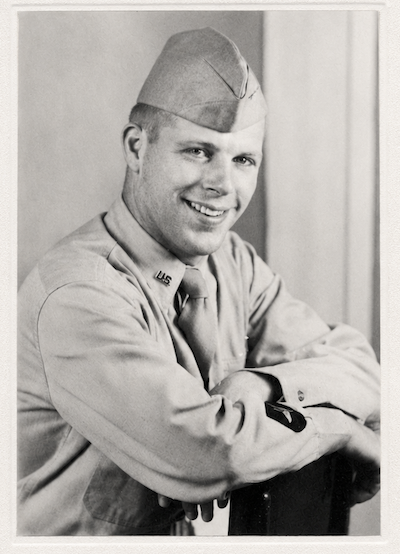
Bud enlisted in the Army on May 17, 1943, under enlisted service number 31344646. His military education totaled approximately fourteen months and followed the standard Army Air Forces pilot-training progression. He first attended the College Training Detachment at Lynchburg College, Virginia, for five months. He then completed two months of preflight training at Maxwell Field, Alabama, two months of primary flight training at Clarksdale, Mississippi, two months of basic training at Greenville, Mississippi, and two months of advanced twin-engine training at Stuttgart, Arkansas. His pilot log confirms that he was flying at Clarksdale by January 17, 1944, in a Fairchild primary trainer. After advanced training, he received one month of four-engine transport training back at Maxwell Field.
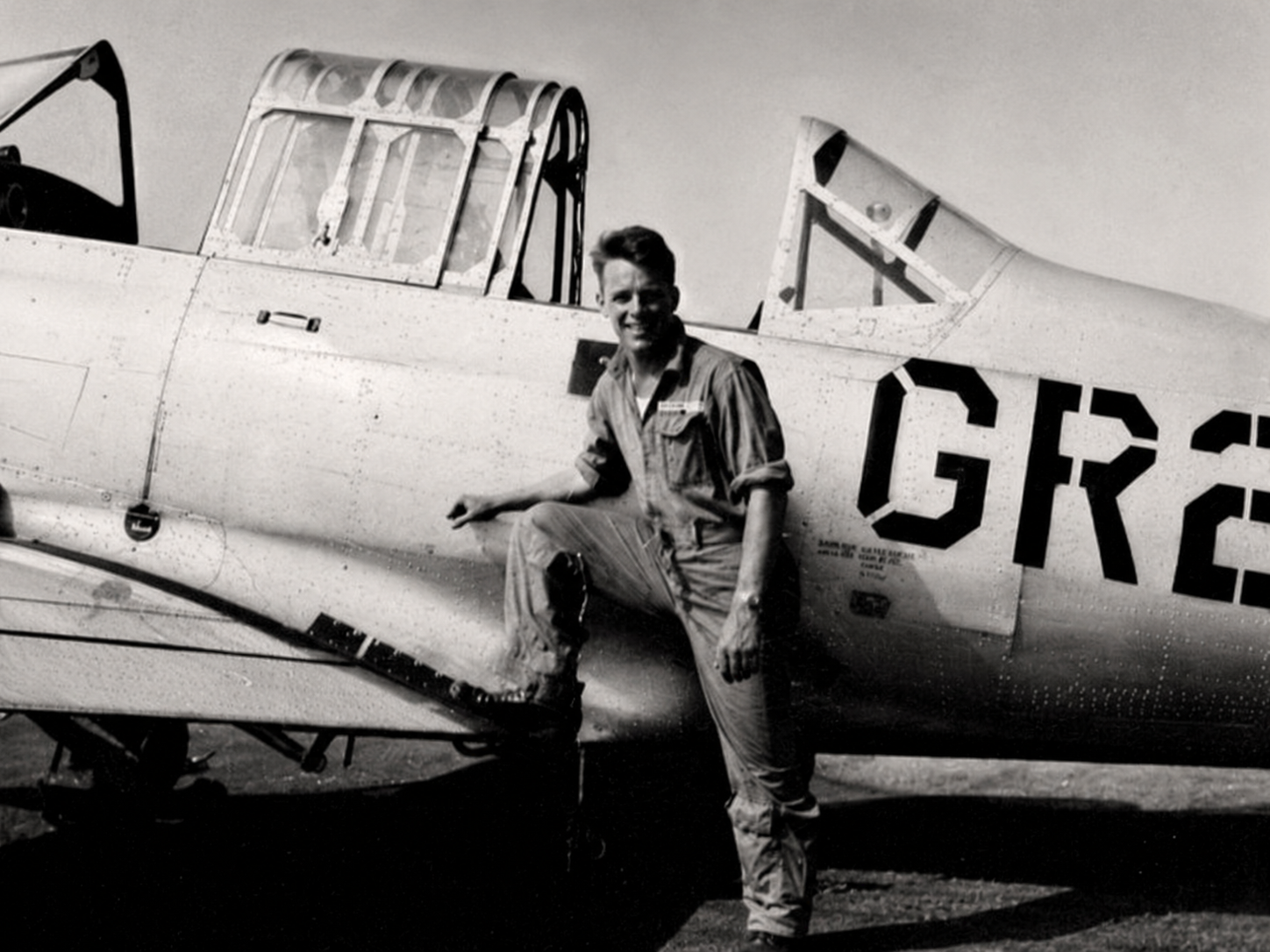
By August 1944 Bud had become a Flight Officer, service number T-61515, with military occupational specialty 1051, Pilot, Twin Engine. His officer separation record gives August 4, 1944 as the beginning of the active-duty period counted on that document.
Bruemmer departed the United States for overseas service on October 1, 1944. He was assigned to the 27th Air Transport Group, under the 302nd Transport Wing, in the European Theater of Operations. His WD AGO Form 100 states that he served as a first pilot and accumulated approximately 225 hours of combat-cargo flying in Europe.
His European service coincided with two officially credited campaigns:
Ardennes-Alsace
Rhineland
His separation document cites War Department General Orders 40, 1945, as authority for those campaign credits.
The surviving records do not yet identify his exact squadron within the 27th Air Transport Group, but his duties and MOS are consistent with twin-engine transport operations, very likely involving aircraft of the C-47 type. His role was not simply administrative assignment to a transport organization: the Form 100 specifically records approximately 225 hours of combat-cargo flying as first pilot.
Later in the war, Bud transferred to the Air Transport Command. His Form 100 states that he flew litter ships, passengers, and cargo, with this later transport work performed in Africa and Italy. This represents a distinct second phase of his overseas service, following the combat-cargo operations in the European Theater. His duties likely included aeromedical evacuation as well as passenger and general cargo transport.
As of September 2, 1945, Bruemmer had an Adjusted Service Rating score of 49, used by the Army in determining eligibility for demobilization. He departed the overseas theater for the United States on November 10, 1945, and arrived on November 19, 1945.
His WD AGO Form 53-98 records:
Continental service: 3 months, 11 days
Foreign service: 1 year, 1 month, 19 days
These totals are consistent with the documented overseas departure and return dates.
Bud was separated from active duty at Fort Devens, Massachusetts, on January 3, 1946.
Three weeks later, on January 24, 1946, he received a commission as a Second Lieutenant, Army of the United States. The commission specifically stated that he would enter active duty under that appointment only when ordered to do so by competent authority. It therefore represented a postwar inactive officer status rather than an immediate continuation of his wartime active service.